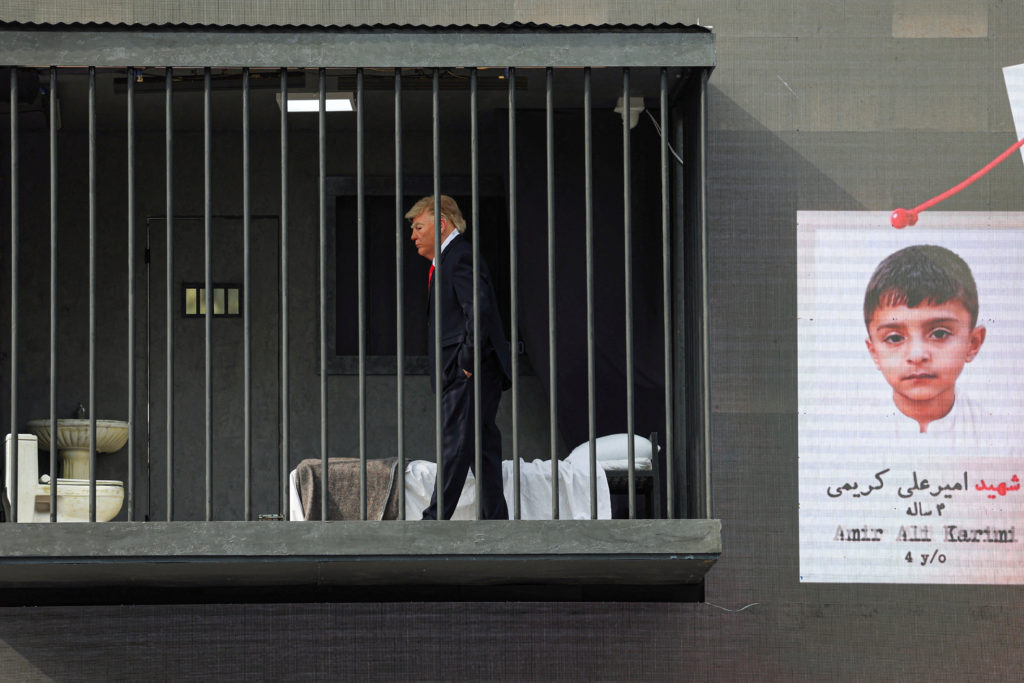
Iranians brace for a return to all-out war as US and Israeli elections approach
Many Iranians are bracing for a possible return to all-out war as elections in the United States and Israel approach, according to The Washington Times, ABC News and PBS NewsHour.[3, 5, 6] Israeli Prime Minister Benjamin Netanyahu, who faces a close vote Tuesday, said Iran's leadership must be eliminated.[5] US President Donald Trump vowed to "finish the job" in Iran, eight months after the war began.[5]
A third aircraft carrier and thousands of troops are making their way to the region, PBS NewsHour reported.[5] The New York Times reported that new intelligence and the possibility of all sides seeking pretexts for action have pushed the war into what it called a dangerous phase.[2] The Washington Times reported that Israeli and US leaders have sharpened their threats and that Iran's leaders remain defiant despite mounting pressure.[6]
Covered by The New York Times, ABC News, The Washington Times and 3 more
Each dot is an outlet that covered it, placed by its audience-lean score (Eady et al. 2025), which measures who shares its links, not how accurate it is. The ticks under the line are all 113 rated outlets Tare reads.
Associated Press reporting, carried by several outlets, said many Iranians were bracing for a possible return to all-out war as Israeli and U.S. elections approached. Prime Minister Benjamin Netanyahu, facing a close vote, said Iran’s leadership must be eliminated. President Donald Trump vowed to “finish the job” eight months after the war began, as a third aircraft carrier and thousands of troops moved toward the region. Some feared strikes after U.S. midterms on Nov. 3. Tehran residents described stockpiling food and medicine; some planned to leave the capital. Iran’s president accused the United States of disrupting talks that had shown little progress.[3, 5, 6]
The New York Times reported that U.S. officials expressed fears Iran was in the “advanced stages” of planning attacks on U.S. officials, including ambassadors in the Middle East and people on U.S. soil. It said Iranians appeared convinced Israel and the United States were preparing a third major attack in 16 months. A senior Iranian official said on social media that the country was preparing surprise attacks. Iran threatened U.S. bases and undersea cables in the Strait of Hormuz; reported attacks on commercial ships there were at their highest since the war’s opening weeks. A U.S. naval blockade restricted oil exports, contributing to medicine shortages, a weak currency, and high inflation.[2, 3, 5, 6]
Background
The conflict’s intense phase included U.S. and Israeli strikes in March and April that damaged thousands of homes in Tehran. Trump had rejected an Iranian proposal last month to end the war and open the strait if the blockade were lifted. Memories remained of protests and a crackdown before the war. Israel’s election was Tuesday; U.S. midterms were Nov. 3. Bloomberg aired analysis that another round of operations could deepen economic strains.[2, 3, 4, 5, 6]
How the coverage differs
The New York Times (left) emphasized U.S. intelligence on Iranian attack plans, the risk that any side might seek a pretext, and how elections could shape decisions by Trump and Netanyahu, including a possible last Israeli strike. NPR (left) framed the war mainly as a factor for voters in both countries, in an interview with a Middle East Institute fellow. ABC News, PBS NewsHour (center) and The Washington Times (right) ran the same Associated Press dispatch focused on Iranian civilians’ anxiety, prices, stockpiling, and officials’ defiance. Bloomberg (center) highlighted post-election escalation risk and a possible reset of U.S.-Israel ties if Israeli leadership changed.[1, 2, 3, 4, 5, 6]
What's still unclear
It is not established whether new large-scale attacks will occur, before or after the votes, or whether U.S. intelligence on Iranian plots is accurate. The status of mediated talks after Trump’s rejection of Iran’s proposal is not publicly detailed. How election outcomes would change military or diplomatic calculations remains disputed among the officials and analysts quoted.[2, 3, 5, 6]
Written by Grok from the full articles, at a reader's request. AI can get details wrong; check the sources.